Last reviewed 2026-10-26
Standard pool screen
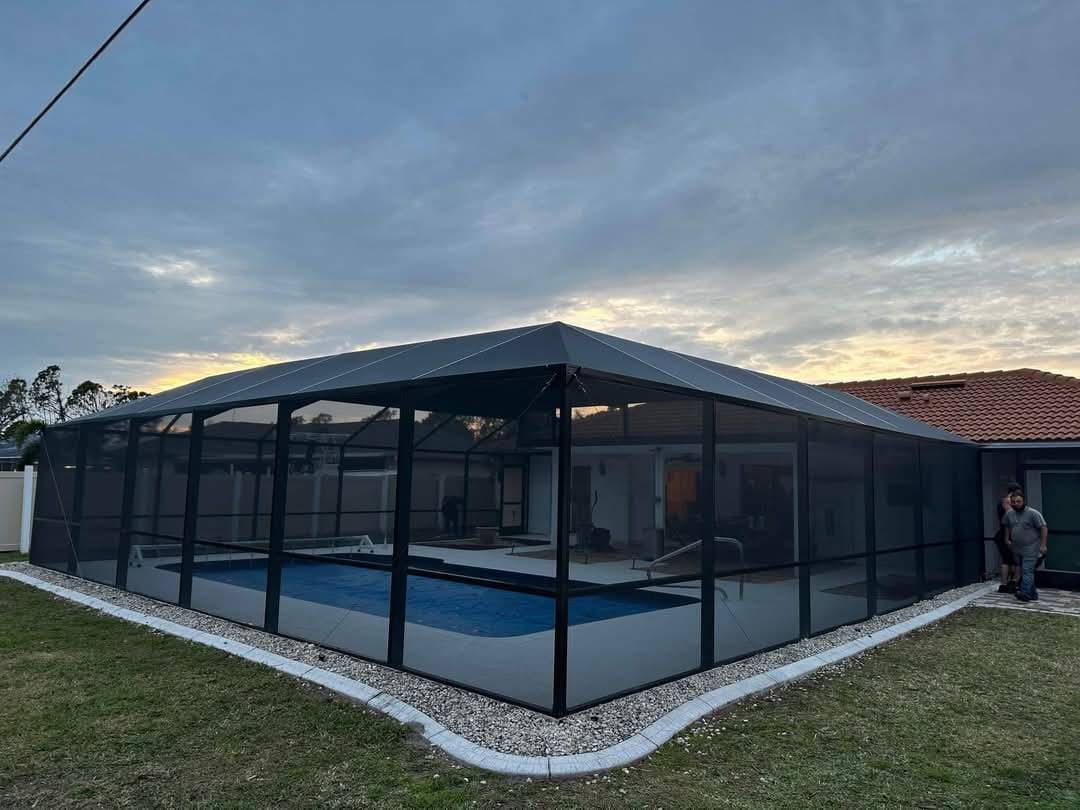
Standard pool and patio screen (commonly an 18×14 mesh — 18 strands by 14 strands per inch) is the most common choice for pool cages. It offers the best airflow and the clearest view, and keeps out mosquitoes, flies, and most flying insects.
No-See-Um screen
No-See-Um screen uses a tighter weave (commonly 20×20 mesh) to block the tiny biting midges common near water, mangroves, and wetlands — a real consideration on many St. Petersburg waterfront and canal lots. The trade-off is slightly reduced airflow and a slightly softer view.
Mixing screen types
Many enclosures use finer screen on the walls facing water or heavy landscaping, where midges come from, and standard screen elsewhere and on the roof. Ask your builder about the options available for your project — other specialty screens exist for privacy, heavier wear, or pets.
- Waterfront or canal lot: consider No-See-Um on water-facing walls.
- Open, breezy lot with a view: standard screen keeps the view clearest.
- Walls facing neighbors: ask about privacy screen options.
When to rescreen
Screens wear from sun, storms, and pets. Panels popping out of their spline, tears in several sections, or brittle, sagging mesh are signs it's time. If the frame is still sound, a rescreen is often the most cost-effective refresh.
Common questions
Does No-See-Um screen block the view?
It's slightly less transparent than standard screen, but most people find the difference small. Many homeowners use it only on the walls where midges are a problem.
Can I switch screen types when I rescreen?
Usually, yes. Rescreening is a good time to change to a different mesh for some or all panels.
This guide is general information, not engineering, legal, or insurance advice. Project-specific decisions are made by the licensed contractor and, for claims, your insurer.